Responsible Outdoors
Store Food and Scented Items at Camp
Identify food, waste, toiletries, and cookware as potential attractants, then follow the specific area's storage system.
On this page
Treat more than meals as attractants
Food, rubbish, cookware, toiletries, and other scented items can attract wildlife. The right storage method depends on the species and rules at the exact destination. Before departure, read the land manager’s current guidance for containers, lockers, bear-resistant equipment, storage locations, campsite procedures, and prohibited items. A method used at one campground may be ineffective or disallowed somewhere else.
Do not rely on a generic hanging height, tree choice, or distance from a tent as a universal solution. Some destinations require an approved canister or locker; others use a different system or prohibit food in sleeping areas. If the rule is unclear, contact the authority and adjust the trip before leaving.
Organize the camp routine
Keep all food and scented items together according to the local storage plan. This includes leftovers, snacks, trash, dishes, toothpaste, and cooking equipment when the authority says they must be stored. Do not leave a pack open while stepping away. Clean spills promptly and keep the cooking area consistent with the site’s requirements.
Never feed or approach wildlife. Feeding can change animal behavior and create risks for animals and visitors. Observe from the distance required by local guidance and use binoculars or a camera zoom rather than moving closer.
Carry the correct equipment
Check that a required container is approved, in good condition, and large enough for the group’s food and rubbish. Learn how to latch it and where it may be placed. Do not assume the campsite provides a locker or that a shared container is available. For a walk-in trip, include its weight and volume in the route plan.
Check conditions on arrival and departure
Look for posted instructions and follow any updated direction from staff. If the required storage system is unavailable, ask the land manager what to do rather than improvising. Pack waste out as instructed and report a damaged locker or container. At another destination, check again; wildlife systems are local and can change over time.
Identify every item that can attract animals
Read the destination’s current wildlife page and list the items it tells visitors to secure. Food is only part of the picture: packaging, rubbish, cookware, toiletries, pet food, and other scented products may also need control. Rules differ by species, site, and season. Do not assume an item is safe because it is sealed or does not smell strong to a person.
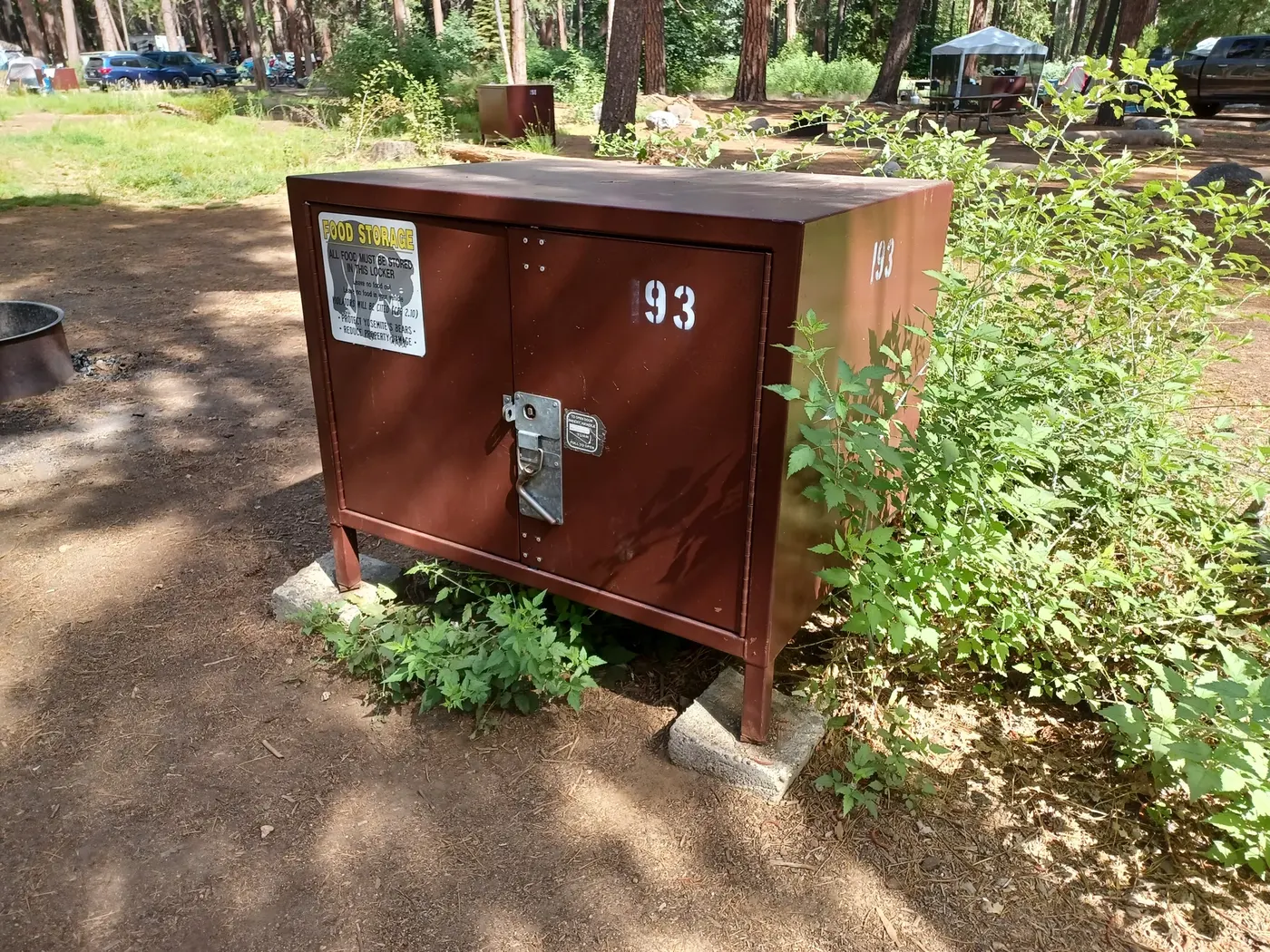
Check which storage methods are accepted. A site may provide lockers, approved containers, or vehicle guidance, while a backcountry route may require a specific portable system. A tent, ordinary backpack, or hard-sided box is not automatically animal-resistant. Confirm the exact product or facility meets the local requirement before relying on it.
Plan storage before packing the vehicle or bag
Make room for the required container and account for its weight, size, and access. For a shared group, decide who carries or checks each item and where the storage system will be used. Put food and scented products together only if the authority’s method allows it. Keep waste contained and separate from clean items, then store it under the same instructions as other attractants.
For vehicle-access camping, read how the land manager wants items stored inside or outside the vehicle. Some animals can damage vehicles or enter through open windows, so a car should not be assumed safe. For walk-in trips, check the route and camp layout so you can secure food without leaving it in a place that can be reached by wildlife or other visitors.
Use containers and facilities as designed
Inspect an approved container for damage, confirm its latch closes, and practice using it before the trip. Do not overload it or leave a lid partly open. Keep the key or combination available to the group and ensure everyone knows how to secure the container after each use. If a locker is shared, follow posted instructions about space, cleanliness, and access hours.
At camp, separate cooking, eating, and sleeping areas when the local authority directs it. Clean up promptly and do not leave food unattended. If a required facility is full, broken, or unavailable, contact the site staff for an approved alternative; do not improvise a hanging method or place items elsewhere based on advice from another region.
Keep the routine simple for the whole group
Before sleep or leaving camp, use the same checklist: food, scraps, cookware, rubbish, toiletries, and pet-related items. Check pockets and day packs for wrappers and snacks. Make sure children and other visitors understand not to feed animals or bring food into restricted spaces. Clear responsibilities reduce the chance that one item is forgotten.
Store a small amount of food accessible during a hike only as local instructions allow. On a route with a specific bear or wildlife protocol, carry and use the required method from the beginning of the outing. The right storage location and timing are local decisions, not universal advice.
FURTHER READING
Sources and scope
These references support the general principles above. Their geography and publication dates vary; check the current local authority for your trip.
- Cooking in CampU.S. National Park Service
Food storage distance and approved containers vary by park and species.
- Camping Safely: During Your StayU.S. National Park Service · 2017-04-21
Some rules and animal guidance are site-specific; readers must follow the local authority.
- Principle 6: Respect WildlifeLeave No Trace Center for Outdoor Ethics
Species-specific distances and responses must come from the local wildlife or park authority.
TAKE THE NEXT STEP