
Responsible Outdoors
Clean, Dry, and Repair Camping Gear
Inspect equipment, remove dirt and moisture as the manufacturer advises, repair small damage, and store it dry for the next trip.
On this page
Inspect equipment after every trip
Before putting gear away, check tent fabric and seams, zippers, poles, stakes, sleeping equipment, stove components, pack straps, and closures. Look for dirt, moisture, abrasion, missing parts, and small damage that could become harder to repair later. Follow the manufacturer’s cleaning and inspection instructions; materials and coatings respond differently to detergents, heat, and solvents.
Dry shelters and sleep equipment fully before long-term storage. If conditions make immediate drying impossible, unpack and dry the gear as soon as practical. Store equipment in the way the maker recommends; some products should not remain compressed for long periods. Keep fuel and other hazardous materials stored according to their own safety directions, separately from sleeping equipment and heat.
Clean with care for the material and place
Remove mud, sand, food, and plant material using the approved method. Check regional biosecurity guidance if equipment has crossed habitats or may carry invasive species. Do not rinse detergent, fuel, or contaminated water into streams or drainage. Dispose of cleaning waste and damaged components according to local requirements.
Make simple repairs only within your skill
Replace a broken buckle, patch a small puncture, or repair a seam only when the manufacturer’s instructions or a qualified repair service supports that method. Test the repair before relying on it. Do not use a temporary repair to make visibly unsafe equipment suitable for a remote trip. A damaged stove, fuel container, pole, or structural component may need professional service or replacement.
Create a small maintenance routine
Keep replacement parts and repair items compatible with your equipment. Label shared pieces and return them to the correct kit. Before each outing, confirm that the gear still works and that the repair supplies are present. A post-trip check makes it easier to replace a worn item before it becomes a problem.
Keep notes without assuming old conditions
Record what needs repair and when you completed it. Recheck current forecasts, access, and site rules for the next trip; maintained gear does not make conditions predictable. If an item’s reliability is uncertain, choose a simpler route or another date while you resolve it.
Make one inspection pass before the gear is put away
Lay items out where you can see them and group them by purpose: shelter, sleep, cooking, carry, clothing, and emergency equipment. Check fabric, seams, zippers, buckles, cords, valves, soles, and battery compartments for obvious damage or missing parts. Look for dampness, dirt, food residue, and odors that could attract animals in storage. Follow the maker’s safety and inspection instructions for any equipment that carries a person, uses fuel, or protects against weather.
Separate items that need different care. A wet tent should not remain compressed with dry insulation; cookware may need a different cleaning method from waterproof fabric. Read labels and manuals before applying soap, heat, solvents, or treatments, since a familiar household cleaner can damage a coating or material.
Dry equipment fully before long-term storage
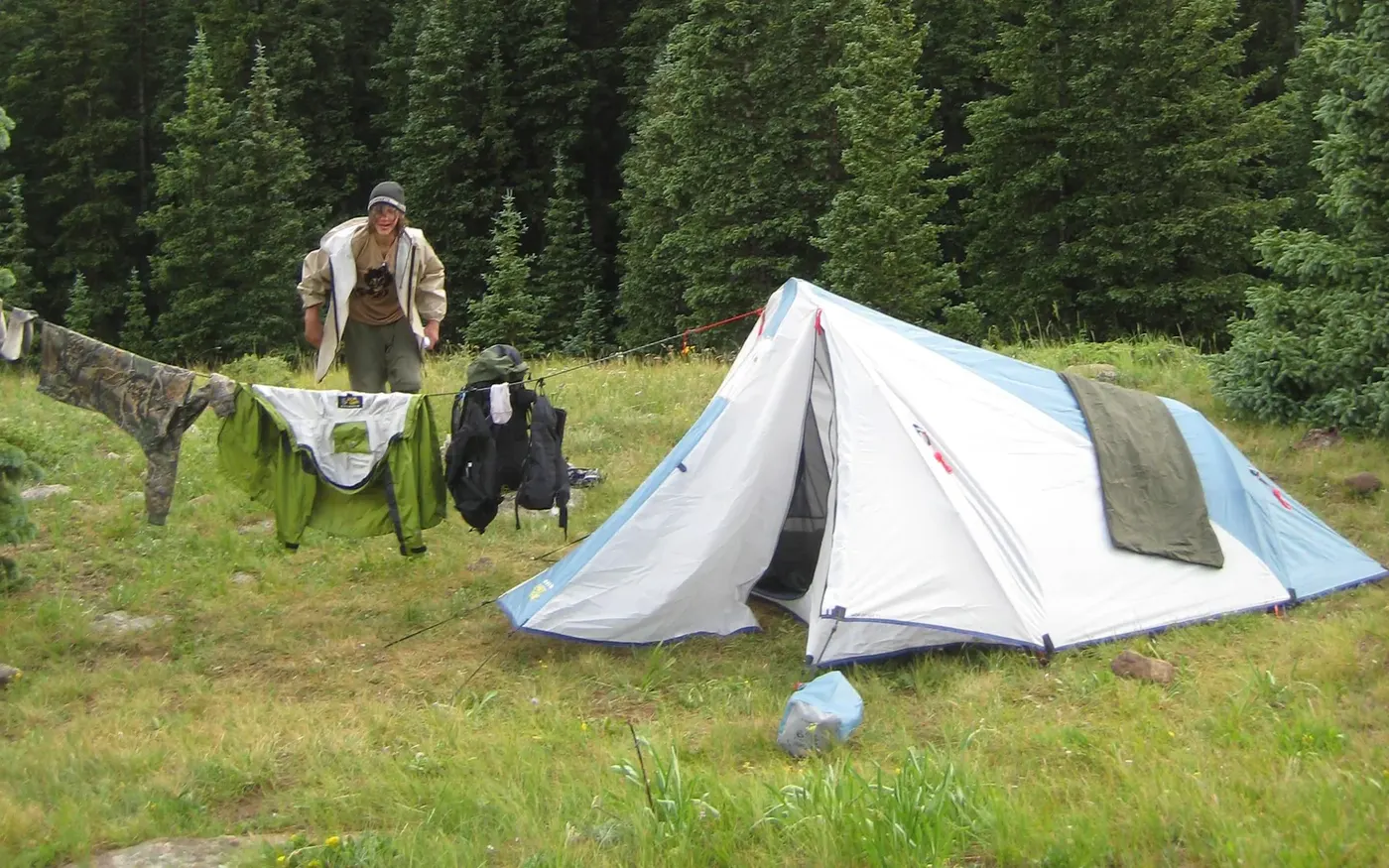
Dry wet gear as soon as practical in a place and manner allowed by the manufacturer. Spread shelter fabric and clothing so trapped moisture can escape, and check seams, pockets, and folds rather than only the outer surface. Do not use direct heat unless the product instructions permit it. If an item cannot be dried on the trip, contain it so it does not soak other gear, then finish drying promptly after returning.
Store sleeping bags, pads, footwear, and tents as their makers recommend. Some insulation should be kept loose rather than compressed for long periods; products differ. Keep equipment in a clean, dry place away from pests, sunlight, and sharp objects. Ensure any fuel or battery item is stored according to its own label and local rules.
Choose repairs that suit the material
Small repairs may be possible with a manufacturer-approved patch, replacement cord, buckle, or seam treatment. Identify the material and follow the repair kit instructions before applying adhesive or sewing. A temporary fix can help with a minor issue, but it may not be reliable for demanding conditions. Do not repair a load-bearing, pressurized, or fire-related component unless the maker or a qualified service explicitly supports that repair.
Check replacement parts for model compatibility. Save the product name, part number, and maker’s instructions with the gear record. If a structural pole, zipper, sole, or valve is damaged, ask the manufacturer or qualified repairer whether it can be safely restored. Retire an item that cannot be trusted for its intended use rather than hiding damage with tape.
Test repaired equipment before relying on it
Follow the maker’s stated cure time and test procedure. Set up a repaired tent at home or in an approved low-consequence place and inspect the result. Inflate a repaired pad and check for continued air loss in the way the maker describes. Wear repaired footwear on a short familiar walk, not a remote route. If the repair fails or remains uncertain, replace the item or change the trip plan.
Record what failed, when it was repaired, the part used, and whether the test passed. That information helps the next person who uses shared gear and can show when a replacement is due. It also prevents an old temporary fix from being mistaken for a permanent repair.
FURTHER READING
Sources and scope
These references support the general principles above. Their geography and publication dates vary; check the current local authority for your trip.
- Principle 4: Leave What You FindLeave No Trace Center for Outdoor Ethics
Use local biosecurity guidance for destination-specific cleaning and inspection requirements.
- Before the TripU.S. National Park Service
US park guidance; requirements and outdoor contexts differ globally.
- Backpacking Tips for Beginners: Getting StartedREI Expert Advice
Retailer content and examples; no purchase requirement or product endorsement is intended.
- How to Clean, Waterproof & Care for a TentREI Expert Advice
Retailer advice; follow the actual manufacturer's care instructions first.
- How to Clean and Store Camping and Hiking GearREI Expert Advice
Retailer advice; manufacturer's instructions take precedence.
TAKE THE NEXT STEP