Choose Your Gear
Choose Hiking Socks for Comfort
Fit, seam placement, moisture, shoe volume, and individual comfort matter more than a universal fiber prescription.
On this page
Compare socks as part of one footwear setup
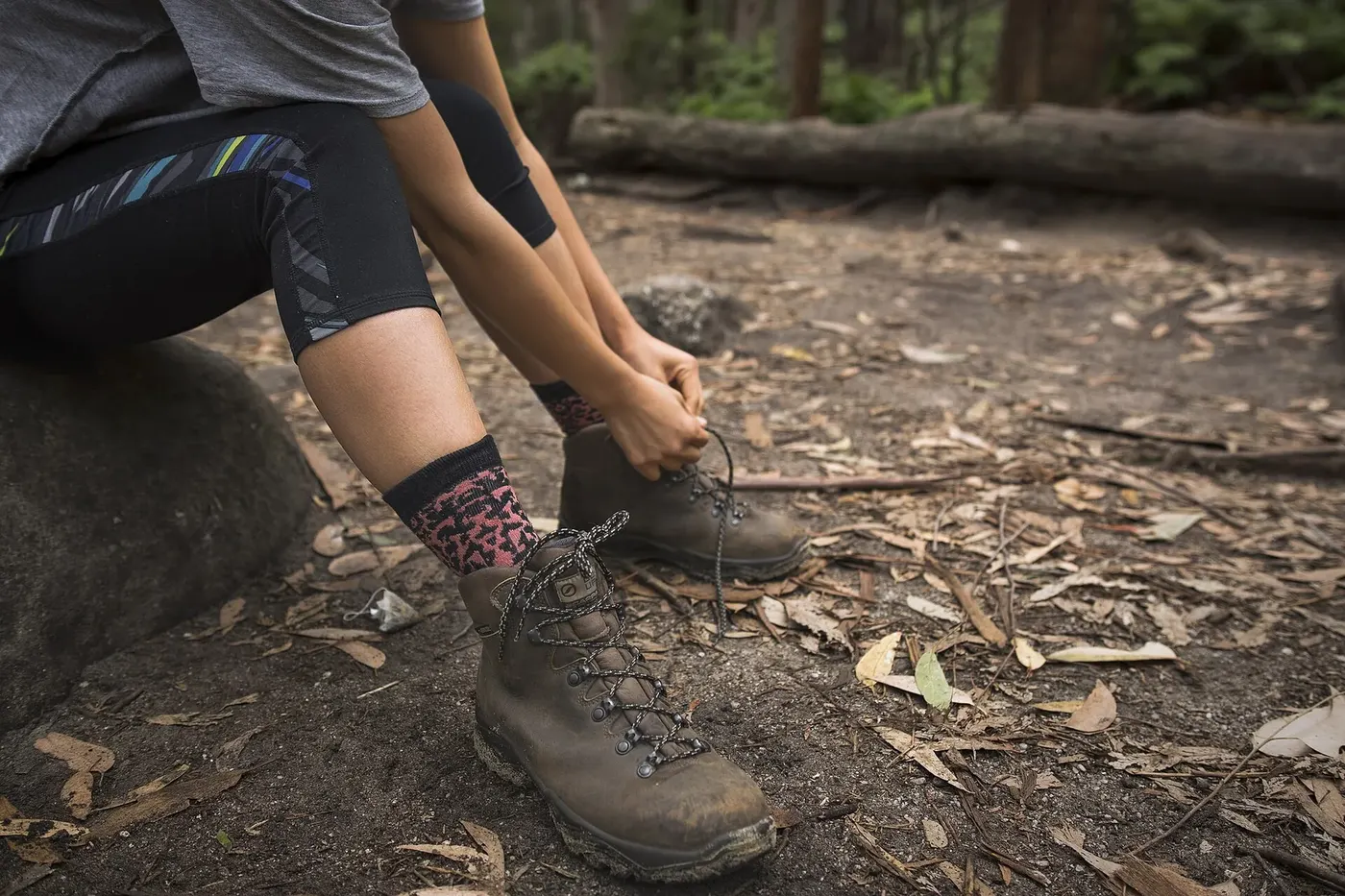
The useful question is not which fiber wins every comparison, but which sock fits comfortably inside the shoes and conditions you expect to use. A pair can look substantial in your hand yet crowd the toes when worn. Another can feel smooth at first but wrinkle after walking. These observations concern fit and construction; a label alone does not resolve them or establish that the sock prevents blisters.
Lay out the footwear, intended insoles, and the socks you want to compare. Keep the other parts of the setup unchanged during an initial comparison so you can tell what the sock changes. Check the maker's sizing and care instructions. If an orthotic or medical concern affects your footwear needs, follow the relevant qualified advice rather than changing layers until pressure disappears temporarily.
Use a two-pair comparison without inventing a winner
Suppose, in a hypothetical fitting exercise, Pair A leaves a bulky seam under one toe while Pair B sits smoothly but feels loose around the heel. These are two unresolved fit issues, not evidence that one material is superior. Try the correct size, smooth wrinkles, and examine how each pair sits in the actual shoe. Stop for discomfort; do not continue a long walk simply to collect a result.
Make a small note of sock size, footwear model, seam position, cuff comfort, and any movement. Recheck after laundering according to the instructions because the comparison should reflect the condition in which the socks will actually be worn. Keep a useful pair and a spare suited to the outing rather than buying several specialist models before learning your preferences. The checks below add thickness, weather, rubbing, and care to that comparison. They help identify a workable combination, while avoiding a promise that any sock will keep every foot dry or comfortable for every route.
Use thickness to preserve a comfortable fit
Sock thickness changes how much room remains inside a shoe. Try the intended socks with the exact footwear and fasten it as you would outdoors. If a thicker pair creates pressure across the top of the foot or crowds the toes, it may make the setup less comfortable even if it feels warmer by itself. If a thin sock allows excess movement, the shoe shape or size may need attention rather than another layer. Avoid solving a poor fit by tightening laces until they cause pressure elsewhere.
Socks come in different heights and constructions. Choose a cuff that does not rub against the shoe collar or leave skin exposed where the shoe edge contacts it. Seam placement and toe shaping vary, so turn the sock inside out to inspect bulky seams and try it on before a longer walk. Small details can matter more than a fiber label when the foot moves thousands of times over a route.
Compare materials by the conditions you expect
Manufacturers use different blends to balance warmth, drying time, durability, stretch, and price. Read the care label and product description, then consider the climate and length of your outing. A material that feels comfortable in cool, dry weather may not feel the same in heat or after repeated wet crossings. No single fiber keeps every foot dry; perspiration, footwear, pace, and weather all contribute to moisture.
Avoid relying on claims that a sock is naturally blister-proof or appropriate for every activity. Change socks only when the route and supplies make it practical, and protect a spare pair from rain if you carry one. In cold conditions, wet fabric can become uncomfortable quickly, so check the local forecast and plan clothing as a system rather than expecting socks alone to manage exposure.
Check the entire foot for early signs of rubbing
During a test walk, notice whether fabric wrinkles under the toes, bunches at the heel, or slides down inside the shoe. Check again after taking the footwear off. Redness, a warm spot, or a small area of persistent pressure can show that something needs attention before a longer trip. Smooth the sock and inspect lacing and shoe fit; if discomfort returns, stop the test and reassess instead of continuing to prove that the combination might work.
Personal comfort varies with foot shape, gait, temperature, and previous experience. Keep notes about which pair and shoe combination felt comfortable and under what conditions. That record can guide the next purchase, but treat each new route and season as a fresh test. Seek qualified advice for recurring blisters, pain, numbness, or skin concerns.
Care for socks and carry a useful spare
Follow the maker’s washing and drying instructions, then inspect elastic, seams, and thinning areas before a trip. Worn fabric may move differently inside the shoe. If a dry spare suits the route and weather, store it where it stays protected and reachable; it may add little value on a short outing. Let damp socks dry fully after walking, and review the pairing after laundering because thickness can change shoe fit. Record what felt comfortable in tested footwear. The aim is a reliable combination for your feet, not a collection of specialty products.
FURTHER READING
Sources and scope
These references support the general principles above. Their geography and publication dates vary; check the current local authority for your trip.
- Hiking for Beginners: Getting StartedREI Expert Advice
Retailer advice; product categories are illustrative, not endorsements, and recommendations are checked against public sources where possible.
- Backpacking Tips for Beginners: Getting StartedREI Expert Advice
Retailer content and examples; no purchase requirement or product endorsement is intended.
TAKE THE NEXT STEP