Camping Basics
Check Campfire Rules Before Lighting a Fire
Explain that bans, allowed fuel, rings, and extinguishing requirements are local; a stove is a useful no-fire alternative.
On this page
Treat fire permission as location-specific
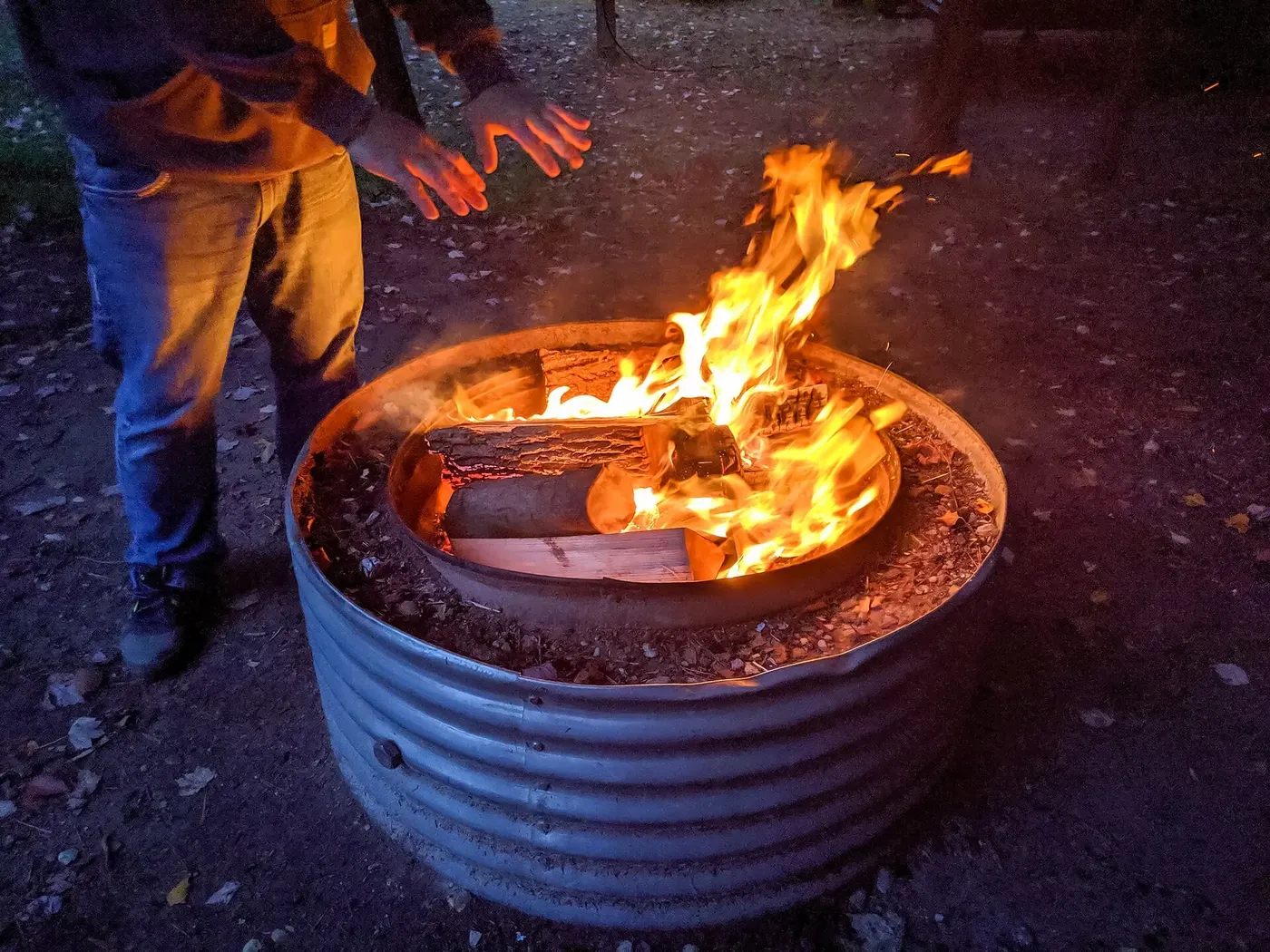
Campfire rules differ by country, land manager, season, weather, site, and current fire danger. A fire ring at a campsite does not prove that fires are allowed today. Check the responsible authority’s current restrictions, including permitted fuel, approved appliances, required fire rings, hours, and extinguishing instructions. If information is unclear, contact the land manager or choose a no-fire plan.
Never carry a fire habit from one destination to another. Restrictions may apply to wood fires, charcoal, gas stoves, or all open flames in different ways. Some places prohibit collecting wood or require visitors to use a designated supply. Follow the rule for the exact site and the current date.
Separate permission for a stove from permission for a fire
Read the actual notice for the appliance and fuel you intend to use. An instruction allowing a certain stove does not necessarily allow charcoal or a wood fire, and an existing fire ring does not settle that distinction. Record the issuing authority, affected area, date, permitted equipment, and any conditions you must meet. Leave an unclear field unresolved until the authority explains it.
For a hypothetical trip, suppose your plan includes a wood-fire meal but the current notice permits only specified cooking appliances. Do not interpret that as permission to build a smaller wood fire. Check whether your actual stove meets the notice, or change the meal to a suitable no-cook option. This is a reading exercise, not a statement of any destination’s current restriction. Equipment permission and knowing how to operate it are separate requirements.
Extinguish as the authority directs
Follow the local instructions for putting out and checking a fire. Methods vary with the site and fuel; a general online recipe cannot replace the land manager’s procedure. If you cannot fully meet the instruction or conditions worsen, do not light the fire. Never bury hot embers or leave a fire smoldering.
Check again before departure and arrival
Recheck restrictions close to the trip because conditions can change quickly. If a ban is active, honor it even when other visitors are burning. Afterward, note the official source and date you checked, but verify again at the next destination. A fire ring, old trip report, or personal preference is not current authorization.
Find the authority that can permit a fire
Start with the land manager or local fire authority for the exact campsite and date. Check whether fires are allowed at all, whether restrictions are active, and what type of fuel or equipment is permitted. A site may allow a contained stove while prohibiting wood fires, or may close all flame-based cooking during high danger. A previous visitor’s report, old sign, or existing fire ring does not establish current permission.
Look for updates close to departure and again when you arrive. Fire rules can change with wind, drought, local incidents, air quality, and seasonal closures. Some authorities publish maps or alert pages that distinguish nearby districts. Confirm that the information applies to your location, not just a broader region or a road you passed on the way.
Decide whether a fire is needed
Ask what the fire would add and whether the trip can work without it. A stove, prepared meal, warm clothing, or earlier bedtime may meet the same need with less fuel collection and simpler cleanup, if those options are allowed and appropriate. Do not collect wood, break branches, or transport firewood across regions unless the authority permits it; movement can affect habitats and biosecurity.
Consider the group’s experience, weather, time, and access to water or emergency help. If nobody knows how to control a fire in the local conditions, skip it. If a restriction is unclear, choose the lower-risk option and ask the responsible authority rather than experimenting at the campsite.
Use only the site and fuel that are approved
When fires are permitted, follow the exact instructions for designated rings, local fuel limits, and supervision. Some regions restrict the size or type of wood, require a particular pit, or prohibit fires outside established facilities. Do not move rocks or build a new ring unless the land manager directs you to do so. Keep the area clear of tents, dry plants, loose clothing, and other visitors.
Keep children and pets away from the fire. Never leave it unattended, even briefly, and make sure the person tending it can follow the authority’s extinguishing method. Wind can carry embers beyond a ring. If conditions become gusty, dry, or difficult to control, stop and use the method specified for safely ending the fire.
Know the extinguishing instruction before lighting
Read the local procedure before starting, including what water supply or tool is required. Different fuels, rings, and environments can call for different methods; a generic online recipe cannot replace the local rule. If you cannot comply fully, do not light the fire. Keep the required resources close enough to use, and agree who is responsible for checking the area.
Do not bury embers, leave a smoldering log, or assume that a cold-looking surface is safe without following the official check. If a fire escapes, move people to safety and contact the local emergency service using the method available in that area. Do not risk a burn while attempting to control a fire beyond your ability.
FURTHER READING
Sources and scope
These references support the general principles above. Their geography and publication dates vary; check the current local authority for your trip.
- Principle 5: Minimize Campfire ImpactsLeave No Trace Center for Outdoor Ethics
Fire bans and legal requirements change by jurisdiction, date, and local conditions; the source is not a live status feed.
- Cooking in CampU.S. National Park Service
Food storage distance and approved containers vary by park and species.
- Trip Planning GuideU.S. National Park Service
US national park context; use the workflow as an example and direct visitors to their local land manager.
TAKE THE NEXT STEP